
Restaurants · inbound calls
AI phone answering for restaurants
We configure an inbound call flow for one venue. It can answer approved questions, collect the details of a reservation request and take uncertain or sensitive calls out of automation. Those calls follow the live-transfer or callback route agreed with your team. Direct booking is enabled only when your own reservation system can support it safely.
- Map the calls
- Choose the route
- Connect only what is proven
- Test difficult calls
Put a person in the route
The short answer
How does AI phone answering work for a restaurant?
It follows a call flow agreed with the restaurant. Approved questions can be answered, details for a reservation request can be collected, and uncertain or sensitive calls leave automation for the agreed transfer or callback route.
We do not leave you with another tool to configure alone. We adapt the flow to one venue's phone and booking setup, test the difficult cases and leave the rules, handoffs and fallback under your team's control.
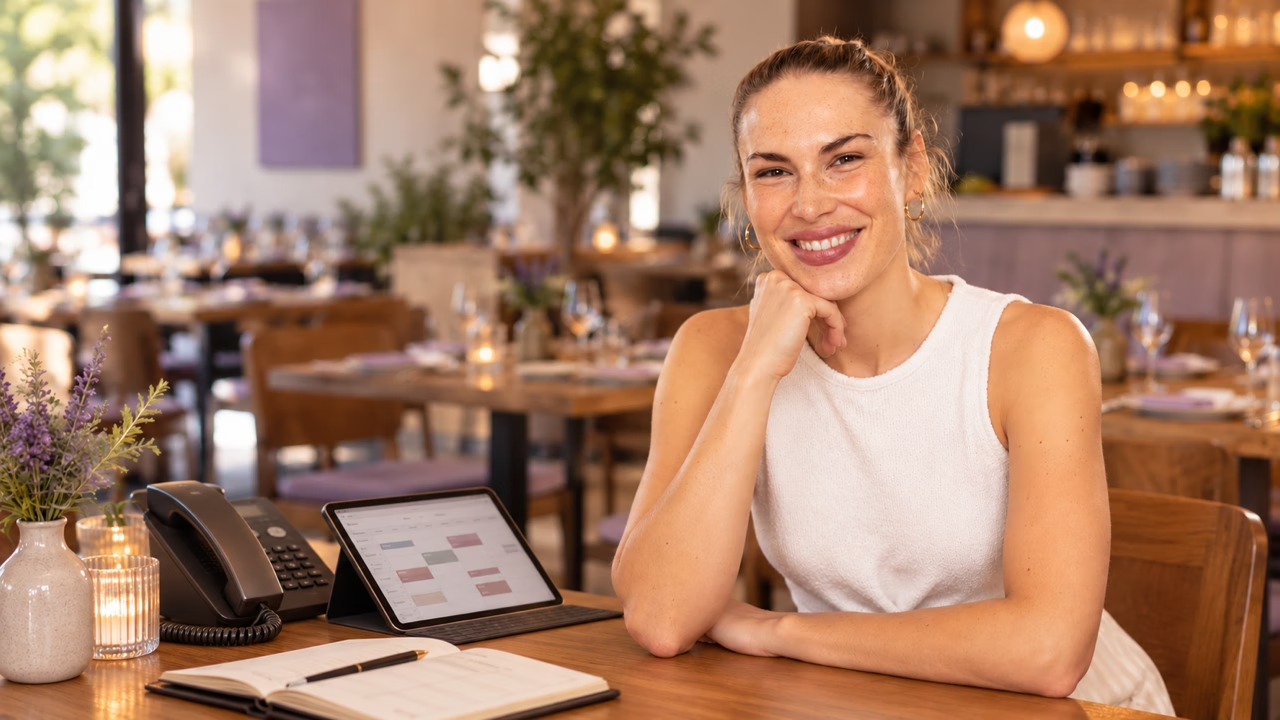
Does this happen during service?
For restaurants whose team cannot always leave service to answer the phone
The phone rings during service or after hours and the person who knows the answer is busy.
You want straightforward calls handled consistently while keeping a person available for exceptions.
You need the first version to work with the phone and reservation setup you actually have.
What we decide with you before the first test
- Which questions may use an approved answer and who keeps those answers current
- Which booking mode your real reservation system can support
- Who receives transfers and exceptions while staff are available, and which callback request is left outside those hours
Before and after
What changes on each call
During service, answering the phone competes with serving the people already in the restaurant. A useful system must handle the repeatable calls without hiding the difficult ones from the team.
- BeforeThe phone rings while the team is serving guests.AfterThe flow answers an approved question or collects the reason for the call without one person leaving service to take it.
- BeforeA caller wants to book, but direct booking has not been proven for your system.AfterThe flow sends your booking link, creates a staff task or offers a transfer. It does not invent availability.
- BeforeThe caller asks about an allergy, complaint, refund or unusual request.AfterThe automated part stops. The call transfers to the chosen person or leaves the agreed callback request.
- BeforeThe phone or booking connection is unavailable.AfterThe call returns to the restaurant's existing phone or voicemail path.
We start with one real restaurant call flow
We map the calls your venue receives and choose an honest route for each one: approved answer, assisted reservation request or a person. We configure the first version around the phone and booking options that are actually available, then test the normal cases, exceptions and fallback with your team.
- Your phone, booking setup and real call questions
- The approved call flow for one venue
- Review the calls that arrive and what the restaurant may approve
- Choose what is answered, prepared for staff or passed to a person
- Test exceptions and failures before connecting a live line
- Approved answers and assisted actionsA person takes exceptions and commitments
Hand over the controls
The call flow and controls you receive
- Call map and answersWe map the incoming call types and write the answer set the restaurant approves.
- Routes and handoffsWe configure which calls receive an answer, an assisted action, a live transfer or a callback.
- Tests and operating guideWe record the test cases, the fallback and how the team changes or removes the setup.
What stays with your teamYou keep the call map, approved answers, routes, test results and a guide for changing or reversing the setup.
How we configure the first version
Map the calls
We review when calls arrive, what people ask, which answers the restaurant can approve and who handles each exception.
Choose the route
Each call type gets one mode: an approved answer, an assisted action such as a booking link or staff task, or a person.
Connect only what is proven
We configure the inbound number and the selected reservation route. Direct booking stays off until your actual system can check availability, prevent duplicates and correct or cancel a reservation created during the test.
Test difficult calls
We test ordinary questions, unclear requests, allergies, complaints, a request for a person and the loss of a phone or booking connection.
Put a person in the route
Your team names who receives live transfers and exceptions while staff are available, and which callback request is left outside those hours.
Restaurants
Three honest ways a call can end
Answered
The caller receives information the restaurant has approved, such as opening hours, location or accessibility details.
Assisted
The flow collects the request, sends the restaurant's booking link or creates a task for a person. It does not claim a reservation that your booking system has not confirmed.
Passed to a person
Sensitive, uncertain and unusual requests leave automation. The route uses a live transfer during staffed hours or the agreed callback outside them.
Questions before we connect a line
Can it book directly into our reservation system?
Only when your exact system offers suitable access and we have tested availability, duplicate prevention and how to correct or cancel a reservation created during the test. Otherwise the flow sends your booking link, creates a task for the team or offers a transfer. We do not present direct booking as universal.
What can it answer without a person?
Only information you approve, such as opening hours, location and accessibility details. We agree the answer set and its owner before testing. Anything unclear or outside that set leaves the automated route.
What always leaves automation?
Allergies, emergencies, complaints, refunds, unusual parties, uncertain availability, an unrecognised request and any caller who asks for a person. You decide whether that means a live transfer or an agreed callback.
Do calls have to be recorded?
No. Recording and long-lived transcripts are off by default. If a restaurant wants them, the purpose, notice, access, retention and deletion process need a separate review for that venue and market.
What happens if the service stops working?
Before any live test, we document how to remove the forwarding or dedicated route and return calls to the restaurant's existing phone or voicemail, not a dead end controlled by the new flow.
Do you promise more reservations or lower staffing costs?
No. We can configure and test the call flow, but we cannot promise how many people will book, how callers will react or what the restaurant will earn or save. The first test measures correct answers, correct handoffs, duplicate prevention and staff acceptance.
Review one week of restaurant calls
Tell us when the phone is hardest to answer, what reservation system you use and which calls must leave automation. In the first conversation, we will separate what can be answered, what can be assisted and what stays with your team.
 Beatriz Tomé AyalaFounder and Principal Consultant, Global AI ConsultingLinkedIn
- Free, with no obligation to hire.
A person designs the difficult parts with you
Beatriz leads the call-flow review and the decisions about automation, handoff and fallback. You will know what the system may do, what remains with your team and who to contact when a rule needs to change.